





What is Reflexology?

What is Reflexology?

What is Reflexology?

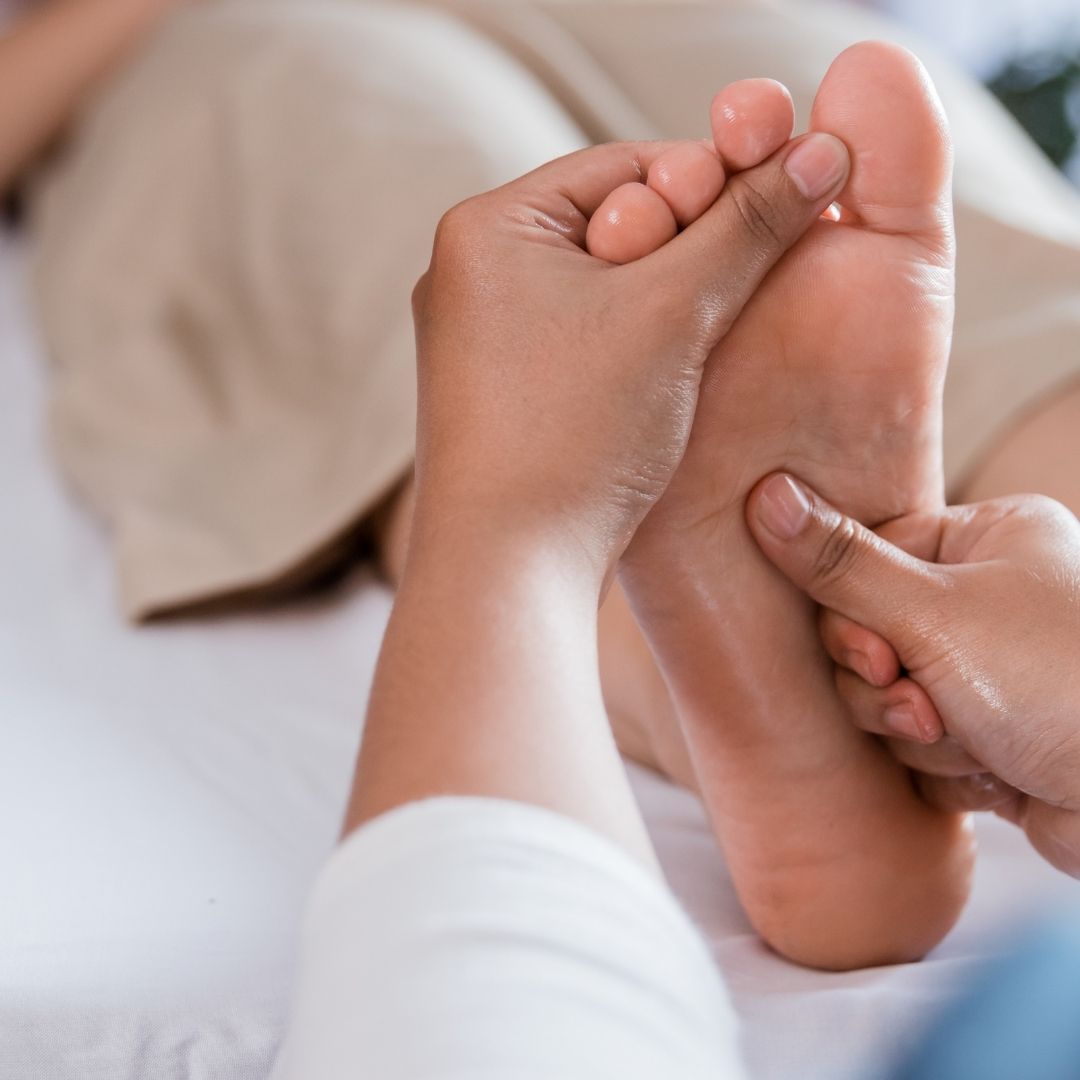
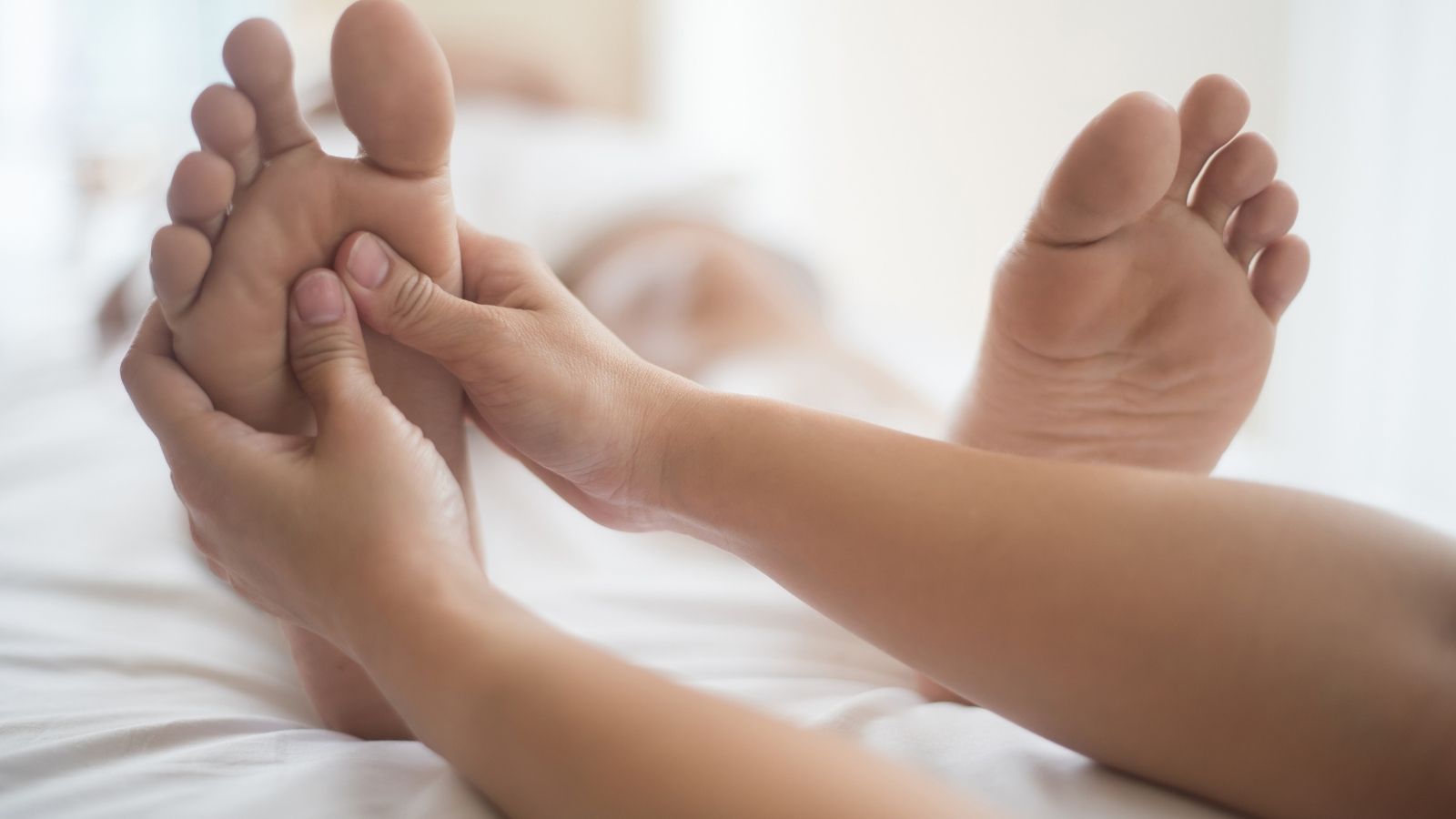
Reflexology is a gentle yet powerful complementary therapy which uses systematic pressure on specific points of the feet, face, hands or ears to bring the body back into balance. This is combined with a range of massage techniques to warm up the muscles and tissues and to help relax and restore you. It has an all-over-body effect yet doesn’t involve you taking any clothes off apart from your shoes and socks! 

It is thought that by pressing specific areas (the reflexes) the associated organ, bone, joint or tissue will be brought back into balance. If something is running a little too quickly, pressing the reflex should help to reset it back to normal. If it is running too slowly, again reflexology aims to bring it back into balance. If you’re feeling tired reflexology can help re-energise you and if you’re feeling like you need to slow down and relax it can help you do that too.

what is reflexology

Why should I have reflexology?

There is something deeply nurturing about putting your feet up and allowing someone else to hold space just for you for that hour. In my practice I use hot towels whenever I can. Just taking the weight off your feet, having them refreshed with hot towels, having your feet wrapped in a towel to keep warm. Being tucked up under a blanket (if you like) all contribute to a sense of being safe, warm, nurtured and cared for. A place where you can really unwind and be yourself. 

Sometimes we find that we hold everything together for other people and reflexology allows us to take some time out for ourselves where we’re not having to hold space for anyone else. We’re not having to work out what’s for dinner or how we’re going to pay the electric bill. We  just have our feet wrapped up in a towel, there may be some soft music playing in the background (you get to choose whether you’d like this or not, some people welcome silence) you’re warm, you’re nurtured, all you need to do is let go and relax.

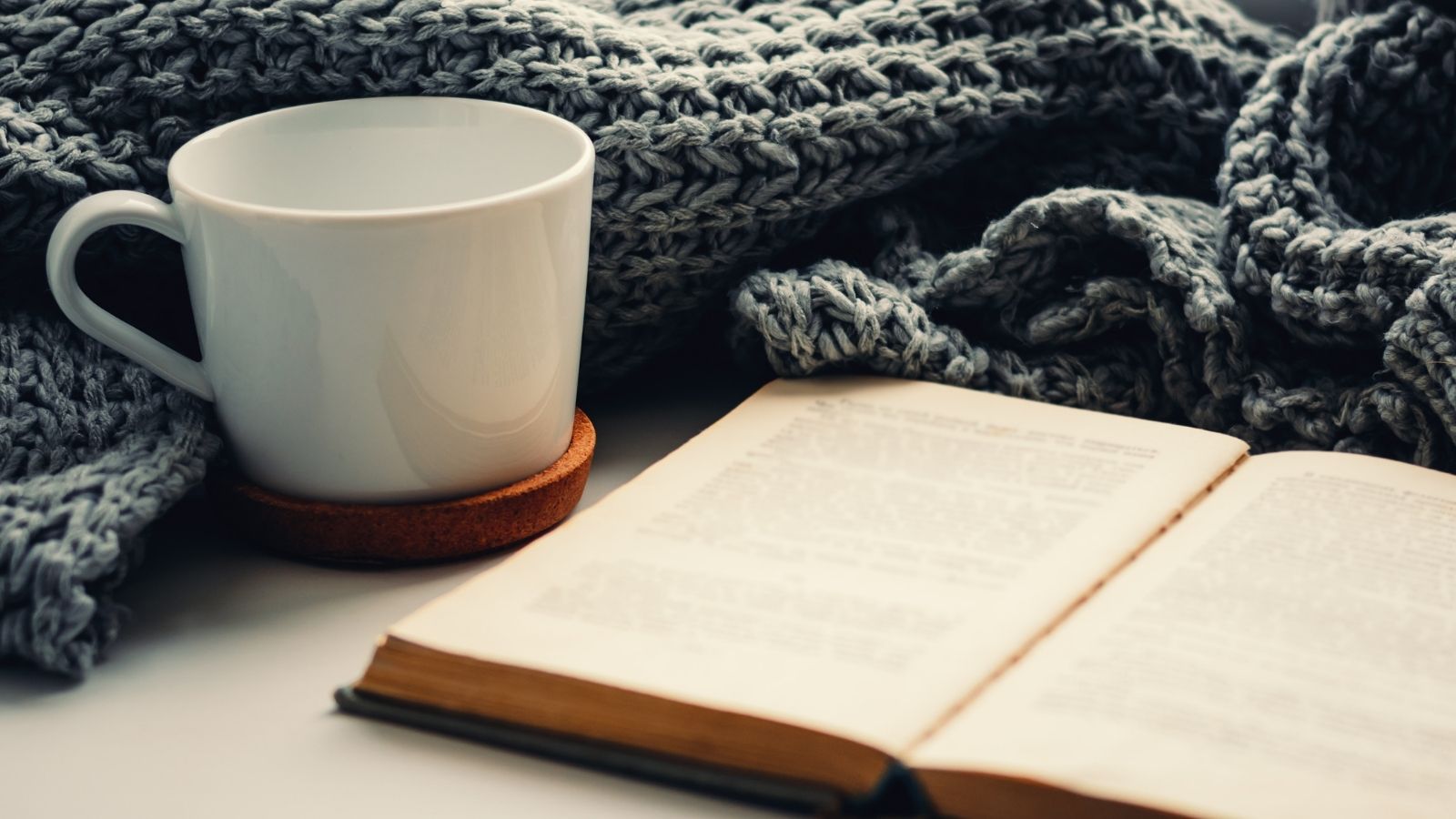
wrapped up in a blanket

What is Reflexology good for?

As reflexology is usually deeply relaxing, it can help the body start to unwind. Releasing tense muscles, lifting low mood and calming busy minds. It can allow you to take a little time out from your daily life. It is good for helping improve your sense of wellbeing and can be helpful in restoring good sleep patterns. It is also great for relieving stress. 

Stress has a massive impact on the body and mind, having many potentially negative effects from raising blood sugar levels to increasing blood pressure, increasing your chances of having a heart attack, a stroke or for you to need to take time off work. 

Foot Reflexology with Sarah Cooper in Boroughbridge

How often should I have reflexology?

Essentially it is up to you, however reflexology does have a cumulative effect. To see the best results and to maximise the effectiveness of your treatments it would be advantageous to book yourself in regularly.

If you have a specific issue that you would like some help with, it may be beneficial for you to initially have a series treatments spaced weekly to make maximum impact. These could be followed up with a fortnightly or monthly maintenance treatment. 

Ideally if you have no specific issues and just need a maintenance treatment you’d have a treatment every 3-4 weeks.

I offer a package where you can buy 6 treatments and save £20 which can help with budgeting. 

reflexology may be covered by your health insurance plan

Check your health insurance, some companies include Reflexology!

If you have health insurance either privately or as a benefit through your work It is worth noting that some health insurance providers offer cash-back on Reflexology treatments but please double check this before booking your appointment as I will need paying on the day of the treatment (you then send the insurance company the receipt and they pay you back) Imagine being able to have regular reflexology treatments at no extra cost! 


If you would like Further Information or to Book an Appointment  please use the buttons below

My Mission and Philosophy

My Mission and Philosophy

What’s your mission in life?

Mine has to be to make the world a brighter place in whatever way I can. Normally that involves making people laugh out loud or fall asleep, depending on the circumstances! I love helping people feel more relaxed. Restoring a sense of wellbeing, calm and order through my reflexology treatments and adding warmth, laughter and joy with my sense of humour. 

I love the look of delight on the customer behind me in the supermarket queue when I suggest that they go ahead of me with their 5 items of shopping and the beaming smile of the chef thanked for creating a delicious meal. I love it when people tell me that they’ve seen something that I’ve written and they’ve almost spat out their tea laughing at what I’ve put. 

cup of tea

The little things in life make all the difference

For me life is about making little changes, it’s the little things that make the world a better place. It’s about telling people to have a good day and thanking them for the things they’ve done right.

It’s about taking a minute to look at the bigger picture rather than diving in feeling afronted because you’ve actually only got half a story available to you at the time. Ensuring that you have time to stop and sniff the roses if you can.

I’ve been known to screech to a halt to take a photo of some pretty wildflowers or to take a photo of a funny sign in a shop. I love seeing the beauty in things, even in the boring, ugly, mundane, everyday stuff.

I love appreciating the small things in life. A hot cup of tea after a walk in the rain, the smell of homemade cookies or the simmering of soup. The crackling of a log fire, the twinkling of fairy lights. 

cup of tea

What am I like?

People often tell me that they feel like they can be their authentic selves with me. That they don’t need to ‘be’ anything other than who they are, because they know I would never judge them (quite rightly so too)  I’m often referred to as a slobby jumper friend, the sort of person where you can wear your slobby jumper, not need any makeup and if you come over you’d be expected to curl up on the sofa. I aim to create a safe space where you can simply relax unwind and let out that much-needed sigh of relief. It is ok for you to be yourself.

I bring this into my treatments too. Just be yourself, it’s safe to do so.

cup of tea

When I am looking for a Reflexologist or Massage Therapist for myself I tend to look for someone who is very human. Who understands what it is like to fancy the occasional glass of wine or crave a chunk of delicious dark chocolate. A real person with thoughts and fears and dreams. Not a wooden, perfect robot.

Someone who gets that life isn’t always easy but who sees that whatever we do we’re doing our best, given the circumstances. I’ve realised that I am that kind of person. This is me!

I am very human, super approachable and friendly. As my reviews and testimonials tell

cup of tea

The best thing about my job is that I love what I do and I am grateful for being able to use my skills as a reflexologist to help people feel de-stressed, less tense, more relaxed, calmer and hopefully with an improved mood. I’d like you to know that you’re absolutely not alone. 

Why I love what I do

I’d like you to feel supported, nurtured and more able to cope. I’d love you to know that you are in in a safe, nurturing space where you can relax, be yourself, be nurtured, pampered and where you can switch off from the other things that are happening for you in your life just for an hour or so. 

cup of tea

Having time out for yourself can be so therapeutic

Having time out for yourself can be so therapeutic. At first it can seem a little selfish or hard to justify having time out for yourself on a regular basis but there is no need to feel a sense of guilt. Just as we can’t make phone calls from a phone with a flat battery, we can’t serve others so well if we’re burnt out or exhausted. If we don’t nurture ourselves first we can’t be our best for our families.

If we’re unfulfilled in ourselves, putting our needs to the bottom of the pile we then get grumpy, or tired or sick! If we put our needs towards the middle of the pile, along with everyone elses, we stand some chance of feeling happy and calm. A happy wife means a happy life for you and the rest of the family.

We need breaks and time out, time to recharge our own batteries to full power. We need to follow our hobbies and interests, meet friends for a cuppa or lunch, to have our hair done or have a reflexology treatment or a massage this is a part of self-care.

Ideally it would  be useful to pencil this self-care time into the diary first as a priority so it’s in, done. Like you’re fuelling yourself first so you have enough energy to do what you need to do. It’s like you have to fill your tank first, rather than seeing if there’s enough time/ energy at the end of the month to fill your car up with fuel.

If you’re going on a long journey you’d fill up your car first, you’d check the tyres to ensure that they had enough wind in them, make sure you have enough screen wash, maybe dip the oil just in case. Life is our longest journey so we need to make preparations first before we set off. Self-care is the same. 

What next?

Would you like to find out more about working with me? Please call me on 07720397734 so we can have a chat. Look forward to hearing from you!

Let’s Connect on Social Media

If you’d like to find me on Social Media I’m on Facebook


Like this Post?

Read some of my other Blog Posts. If you love what you read, please share!

How to give yourself permission

How to give yourself permission

What do you need to give yourself permission to do? Some of us need permission to rest or have time to ourselves. Others need permission to do something big like leave a bad relationship or find a new job..

Rosemary Essential Oil

Rosemary Essential Oil

Rosemary Essential Oil helps you to think more clearly and may be helpful for foggy-headedness associated with menopause. It helps relieve pain and is good for headaches and migraines

How to look good during menopause

How to look good during menopause

How to look good during menopause As you go through menopause, the fluctuation of hormones can cause your skin and hair to change. Skin can become dry and start to lose some of...

Chronic Migraine Survival Kit

Chronic Migraine Survival Kit

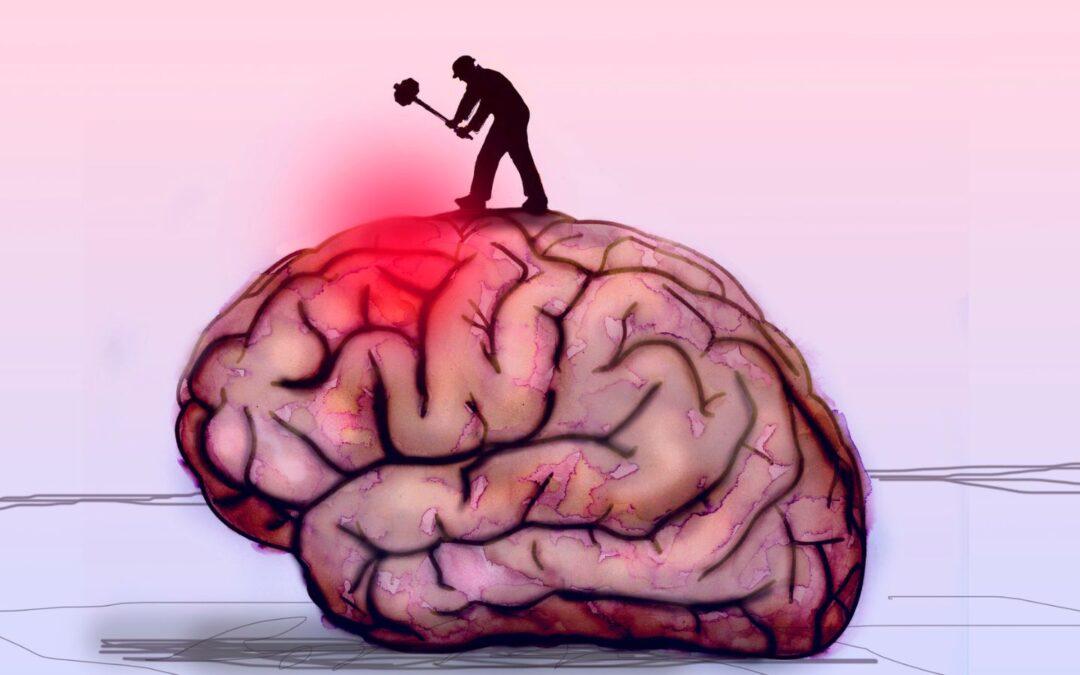
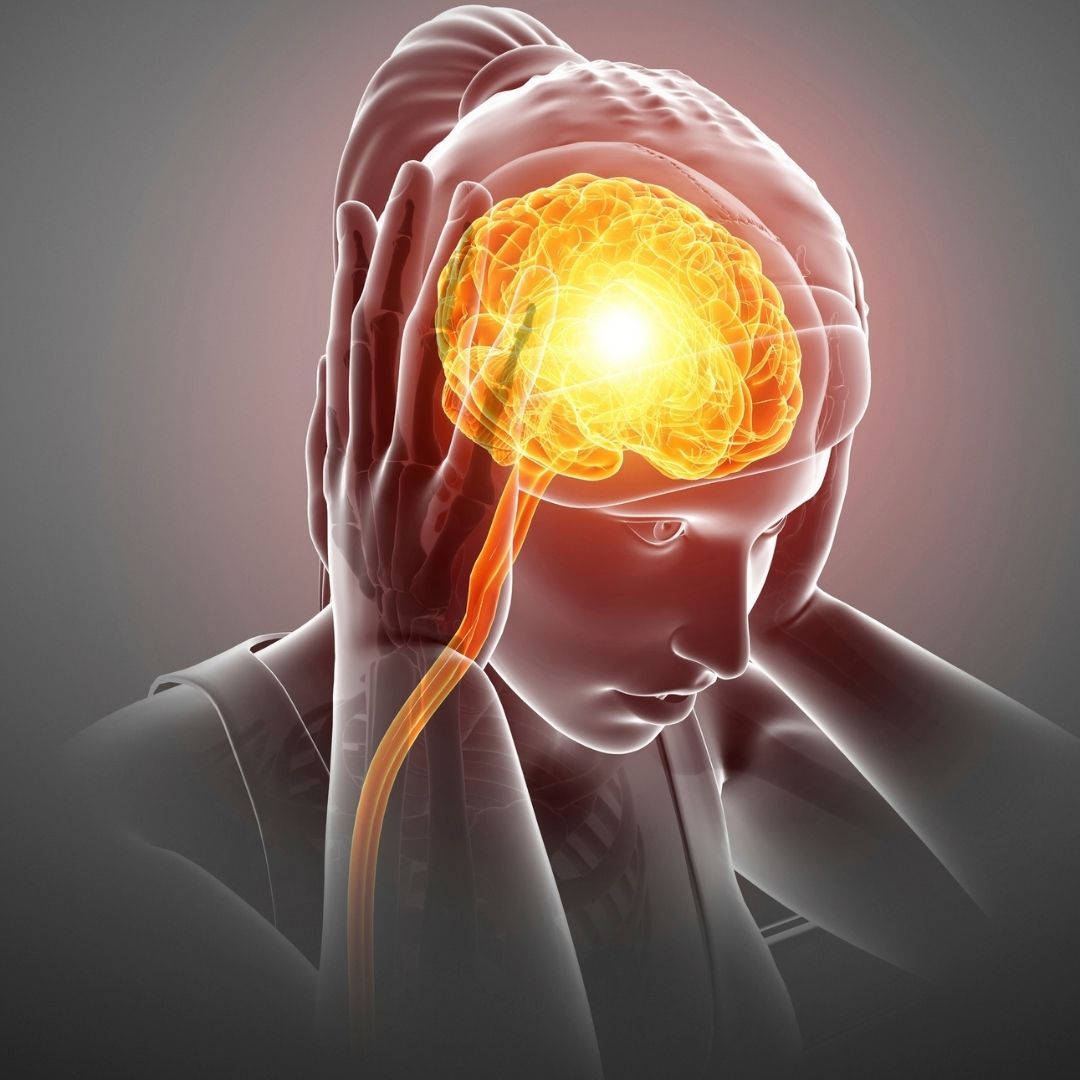
migraine brain on fire

What is Chronic Migraine?

Chronic Migraine is where you suffer from more than 15 headaches a month with at least 8 of these being classed as migraines. A migraine is generally a severe, one-sided headache which may be accompanied by visual and neurological symptoms and in some cases nausea, vomiting and diarrhoea.

A migraine is just a headache, right?!

Wrong! Migraines are very debilitating as sufferers don’t just suffer from the migraine itself. It can take several days to recover from a migraine. 

There are Four Distinct Phases of Migraine

Migraine comes in four distinct phases with the Prodrome or build up where the body gathers energy to have a migraine. During this stage, patients may feel very hungry, thirsty or tired or may start craving certain foods. There may be some foggy-headedness, irritability or minor loss of speech and concentration.

This is often followed by the Aura (although not everyone has an aura) Aura is where you get the visual disturbances with flashing lights, zig zagging, blurred or double vision. The limbs may go numb or start to tingle or loose sensation.

Migraine headache

The main attack is where the intense, throbbing pain kicks in, you may feel or be sick, feel depressed or have difficulty sleeping. At this stage chances are you’ll just want to sleep in a darkened room. This stage can last from 3 or 4 hours to a couple of days.

After the migraine follows the postdrome or migraine hangover. This can leave you feeling rubbish for a day or two whilst your body recovers. During this time it is important to get plenty of rest, eat a light diet and to stay hydrated, avoiding caffeine if at all possible. (Though some patients find that drinking caffeine is actually helpful, so see which way works best for you!)

Blood Tests

People to contact if you’re having chronic migraines

Your GP

It is worth speaking to your GP as they will be able to potentially prescribe you with some preventative medication to stop you from having migraines so frequently or offer you some medication to take during an attack (or in some cases both!)

They may need to adjust any contraceptive pills you may be taking or prescribe a different form of contraception, as some brands of the contraceptive pill can exacerbate migraines.

They may also take a blood test to rule out vitamin/mineral deficiencies as some of those can make migraines more prolific. You may be referred to the headache clinic or Neurology if your condition is severe and not responding to the usual treatment.

optician

Your Optician

Especially if you are having any problems focusing or are spending a lot of your time at your computer every day. Having your eyes tested can help ensure you’re wearing the right prescription glasses and often can run tests to ensure that your eyes are looking healthy with no sign of papillodema.

If you spend a lot of time at your desk you might be able to get a pair of mid-distance glasses for working at the computer. 

dentist

Your Dentist

 Especially if you’re stressed, tend to grind your teeth in bed, or have noticed tension in your face. Sometimes migraines can be connected to a face/jaw problem. They should be able to check for any problems with your jaws and teeth and put your mind at rest.

What does a Reflexology Treatment involve

An Acupuncturist /Osteopath/ Reflexologist

All of the above mentioned therapies are great for helping with migraines in their individual ways. Acupuncture involves carefully placed, small needles which surprisingly aren’t painful at all, which helps release energy blockages and has a good reputation for relieving migraine.

An osteopath can gently tweak your body, spine and bones back into alignment and is very good if you’ve got lots of tension in your neck and shoulders or spine.

A reflexologist can help you relax, unwind, release stress and tension by massaging and pressing on specific parts of the feet or face. The aim of reflexology is to bring the whole body back into balance. It can work more quickly if you have a series of treatments ideally close together over a period of 6-8 weeks in the first instance followed by maintenance appointments every 2-4 weeks.

Health Plans

Some health plans include acupuncture or reflexology so if you are with a health insurance plan, check it out.

employer

 Your Employer

If you are employed it would be worth speaking to your employer about your migraines so that they can work with you to make your working environment as migraine friendly as possible.

This might involve you having regular breaks away from screens, having regular meal times and breaks, having furniture at a good height to reduce tension on your neck and shoulders.

If you have severe migraines like hemiplegic migraines it would be helpful for them to have a medical plan in place for you so they know what to look out for and what to do should it happen. Hemiplegic migraines often mimic strokes (and hard to differentiate between the two).

Migraine Cold Compress

Products that might help with Chronic Migraine


White Tiger Balm Ointment

Especially designed for headaches and migraine. Very powerful stuff but make sure you wash your hands carefully after applying it. Available from supermarkets, pharmacies and big online retailers.

Cooling Sports Towel

A cooling sports towel, dipped in very cold water and then squeezed out before applying to the neck or head.

Sunglasses

Sunglasses/ UV reactive lenses if you wear glasses

Cooling Pillow Mat Inserts

Having a cool pillow can help. Look at online retailers to find a cooling pillow mat insert

Orthopedic Pillow 

Helps relieve pressure on spine

Wheat pack

Can generally be microwaved to help warm the neck/shoulder muscles if needed. (Check manufacturers label before microwaving)

Gel eye masks

Can often be used warm or cold to ease sensitivity on the eyes. 

Orange Filter for computer and phones

Look in your phone/computer settings for a nightshift filter or eye comfort filter.

Roll-on headache Balms

 These use aromatherapy to help reduce headaches. 

HeaderTerm

A tens machine that’s like a headband, especially designed for migraines and headache relief. See Amazon and other online retailers for more information

A heavy blanket

You can get special weighted blanket (with an equally hefty price tag) but often just having a good old fashioned heavy blanket can make all the difference

Google ‘Migraine Relief Products’

Check out big online retailers for ‘migraine relief’ products. Do NOT buy medication online unless from a reputable retailer like Boots or Superdrug etc

Migraine – What it is and what you can do about it

Migraine – What it is and what you can do about it

What is Migraine?

Migraine is generally a severe, one-sided headache, which may be accompanied by visual disturbances, neurological symptoms and/or nausea and vomiting. Visual disturbances can include flashing lights, zig-zagging, double vision, blind spots and blurring.

Neurological symptoms can include tingling in the limbs, pins and needles, facial numbness, loss of sensation or numbness in the arms and legs, confusion, dizziness and loss of speech.

Some patients get ‘just’ the headache and others get some of the other symptoms and this may vary from attack to attack.

It is also possible to have a silent migraine where you get the other symptoms without the headache.

Children can get a stomach migraine which makes them vomit rather than necessarily having a headache.

It is thought to affect around 6 million people in the UK  with 190,000 people having a migraine on any given day. So if you suffer with migraines, you’re not alone.

sunglasses

What causes migraine?

Whilst the causes of migraine are not yet fully understood it is widely thought that it may be linked to abnormal activity in the brain which in turn has an effect on the way the brain functions. Certain types of migraine (for example Hemiplegic migraine) may be hereditary and due to a genetic factor. 

There are a range of well-known triggers which seem to either spark off a migraine or to exacerbate them. Everyone is different so it’s useful to isolate what is likely to trigger yours and to avoid that as much as possible.

Keep Track

Keep a note of what you eat, how you feel, what you drink, your stress levels and where you are in your cycle if that applies to you and see if a pattern builds.

Apps like Migraine Buddy are useful to help you keep track of your migraines.

cheese chocolate wine

Migraine Triggers

Migraines can be triggered by a range of stimuli including:

  • Skipping meals or eating in a rush,
  • Being dehydrated,
  • Drinking alcohol especially red wine and darker spirits
  • Eating certain foods including cheese, tomatoes, chocolate, citrus fruits
  • Additives in diet, slimline and processed foods such as artificial sweeteners, nitrates, MSG and preservatives
  • Drinking caffeine
  • Hunger/Thirst
  • Stress at home, school, university or work
  • Weather and environmental factors (such as thundery weather or a high pollen count)
  • Hormones 
  • Working environment, especially when sitting in the same position all day
  • Lack of or too much sleep!
  • Strong perfumes
  • Strong sunlight/bright lights/loud noises
  • Tension in the neck and shoulders
  • Some medications/contraceptive pills
  • Overusing painkillers. Having too many headache tablets can give you a rebound headache!
Migraine woman

Hormonal Migraines

There may be a hormonal element to migraines in women. Some women note that they have migraines during the 2-3 days in the run up to their period and in the first 3 days of their period. It is thought that a drop in oestrogen levels can contribute to headaches.  A period tracking app like Clue may also be useful.

Pregnancy can also have an effect on migraines although this does vary from person to person.

Whilst migraines are fairly common in pregnancy, if you do suddenly get a severe headache after 20+ weeks (especially from week 24 onwards) which is accompanied by visual problems, pain in the rib cage, vomiting, fluid retention or sudden swelling in your hands, feet or face, contact your Midwife or 111 urgently.

The perimenopause, menopause and HRT medication can all exacerbate migraines in some women.

Migraine Cold Compress

How to manage a migraine

For occasional migraines the best solution would be to take a couple of over the counter painkillers, having a drink and a snack and going to bed in a darkened room until it passes.

If you feel nauseous you can buy anti-sickness tablets from your local pharmacy. There are also special migraine relief tablets that have an anti-sickness medication built-in.

Double check that you’re having the correct amount of paracetamol in total as many of them already contain paracetamol so DON’T take them with paracetamol! If  you’re in any doubt ask your pharmacist for advice.

Having an ice-pack might help (if carefully wrapped in a tea-towel)

Try to stay hydrated and if you feel up to it, having regular snacks or small meals. Sipping drinks can be kinder to the stomach than gulping them down.


Blood Tests

 When to get help from your GP

If you find that you’re having more than 5-8 migraines a month speak to your GP who may be able to prescribe a preventative medication or take a blood sample as sometimes migraines can be linked to a deficiency of a vitamin or mineral.

There are also medications (often triptans) you can be prescribed to stave off an attack as soon as it happens, including injections and nasal sprays.

If you have migraines a lot and other things haven’t worked, you might be referred to a specialist Headache nurse or to the Neurology department for further tests and treatment if necessary. 

stress

What else can help?

Reducing Stress

As migraines are often triggered or exacerbated by stress it is important to be as stress-free as possible.

Finding ways of releasing stress and tension are very helpful in preventing or minimising migraines. Think of any areas of your life that might be particularly stressful.

Is there anything you can do to make them less stressful? Any meetings you don’t need to attend?

Children’s activities that they no longer enjoy? Feel free to say no to anything you find stressful if you’re not contracted to be there!

Set up new systems

Sometimes setting up a new system can reduce stress right down. Like having something in the slow cooker ready for when you get back from football practise rather than having to start cooking from scratch when you’re tired and hungry. Or laying out clothes the night before. 

artist

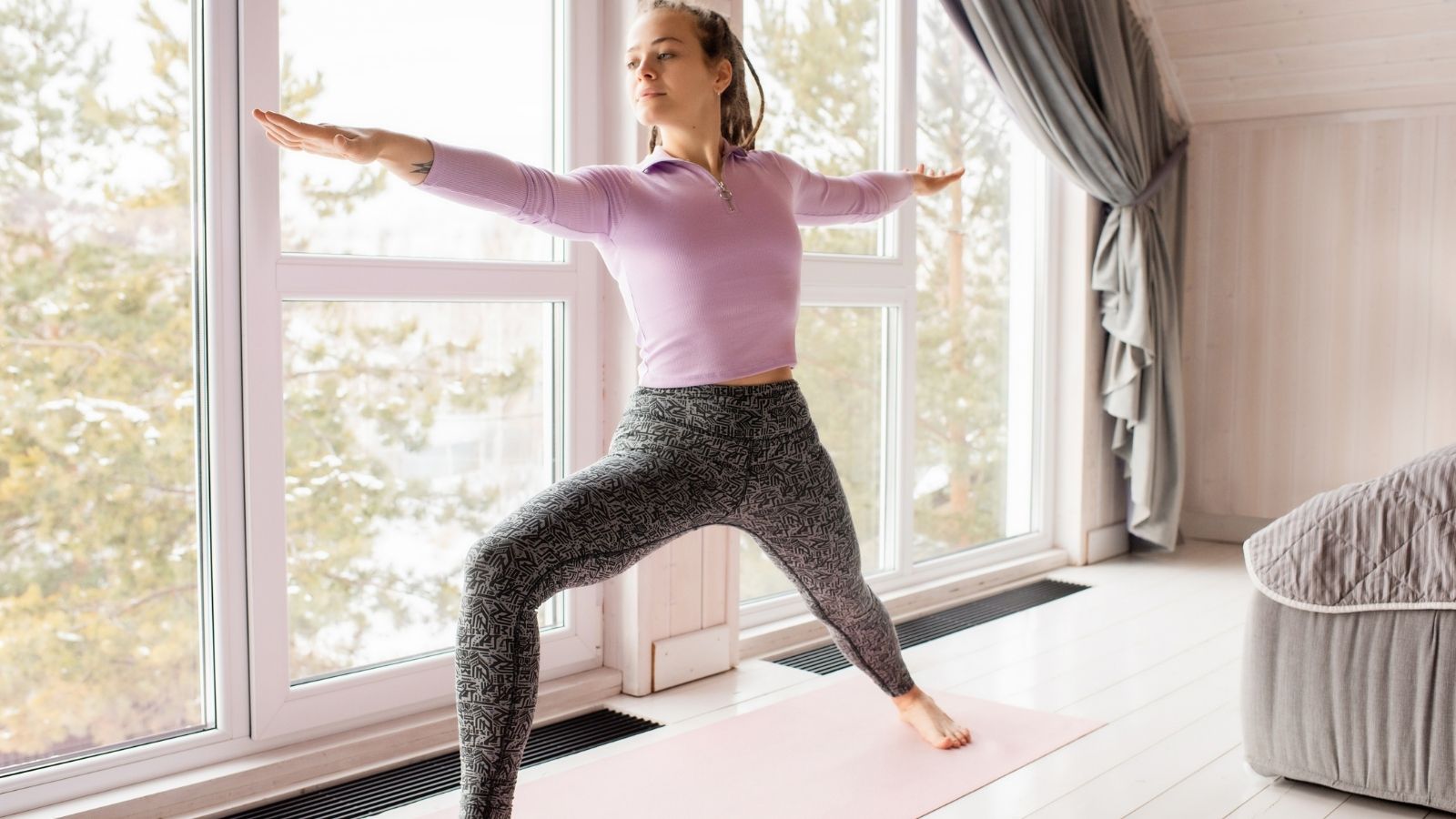
Take time out. Do some exercise. Enjoy your hobbies

Taking a little time out for yourself can be really powerful.

Gentle exercise such as walking, swimming or yoga can be useful as can mindfulness classes. Or ensuring you take part in hobbies that you love. 

reflexology thumb presses 1

Have Reflexology/ Massages / Acupuncture

Having a regular reflexology treatment or massage can be helpful as it helps to balance the body and to relieve stress and tension and to allows you to have some time to yourself.

Reflexology uses a firm but gentle pressure on specific points on the foot or face which is combined with massage techniques and holding specific points and is usually deeply relaxing and nurturing.

Acupuncture is also thought to be effective for managing migraines. This involves having tiny needles inserted into different areas of your body (and surprisingly doesn’t hurt!)

The key is to have a series of regular treatments over a period of about 6-8 weeks for best effect.

If you have health insurance cover double check to see if this is covered in your policy as some do cover things like Reflexology or Acupuncture.


Migraine headache

Additional Resources

Like this Post? Please share with your friends 

Read my Chronic Migraine Survival Tool Kit blog post

Managing migraine the natural way

Follow the hashtags #migraineawarenessweek and #letsbeatmigraine 


Always keep up to date!

If you’d like to be notified when I post a new blog post please subscribe here

Over to you!

Please let me know your thoughts in the comments below

How to have a happy and healthy new year

How to have a happy and healthy new year

Do you start every new year thinking 'this is going to be my best year yet?! Or is that only me? I know that I wake up on 1st January with good intentions, wanting to change just about everything about my life and for a week or so it works, then I get tired. Or I...

7 Popular Reflexology Myths Busted

7 Popular Reflexology Myths Busted

Reflexology Myth 1. “Reflexology hurts”

Myth!

Reflexology should not hurt. Generally speaking the pressure should be at an acceptable level so it feels firm enough without being sore.

You may experience a sore spot if an area is out of balance but this should be just tender rather than painful as such. 

Please tell me if you need to have your pressure adjusted

If you are finding that the treatment is painful please please let your reflexologist know at the time so they can adjust the pressure to suit you. Never suffer in silence.

Never wait until the end of a treatment to mention that you need a different pressure. We want you to have the best experience possible, so if that means changing pressure or adjusting your position etc we would rather know about it so we can do something about it!

Generally the reflexologist will ask you if the pressure is at the right level, although if they see that you seem to be comfortable (or asleep!) they won’t keep asking you. There’s nothing more annoying than being asked every 43 seconds if the pressure is ok when all you want to do is shut your eyes and let the world float by!

Reflexology does not diagnose

Reflexology Myth 2. “Reflexology can diagnose illnesses”

Myth!

Reflexology can often highlight an area that seems to be out of balance but it does NOT diagnose anything. Only doctors are allowed to make diagnoses. Sometimes the reflexologist might encourage you to visit your GP if you are feeling unwell, but they will never diagnose a condition. 

You may find that at the end of your treatment your reflexologist might ask you if you’ve been experiencing any concerns in a particular area especially if we find a reflex feels particularly crunchy, fizzy or out of balance. Sometimes we pick up on things (often tension in shoulder reflexes or crunchiness in the spine or neck reflexes) but then most people carry some tension in their upper back, neck and shoulders.

Reflexology Myth Reflexology does not tickle

Reflexology Myth 3.  “Reflexology tickles!”

Myth!

Reflexology should not tickle. A firm pressure is used so you wouldn’t expect to have the tickly sensation you’d associated with having your feet tickled.

I’ve yet to come across anyone who has feet so ticklish that they cannot have a reflexology treatment. I am trained in a lot of other treatments so in the unlikely event of you having feet that are too ticklish for reflexology I can offer you one of my other treatments instead.

hard skin on feet

Reflexology Myth 4. “I have hard skin so I can’t have a reflexology treatment”

Myth!

Having hard skin doesn’t affect your ability to have a treatment. Often where hard skin forms you find that there is an area that is either a little out of balance or in need of extra attention. A firmer pressure may be needed over the hard skin but that in itself won’t prevent you being able to have a treatment.


adrenal reflex knuckle hold

Reflexology Myth 5. “Reflexology is just a foot massage, right?”

Myth!

Wrong! Whilst reflexology does include some massage techniques to warm up the muscles and relax you, the actual reflexology treatment relies on using systematic pressure on the feet which helps bring the body back into balance. It generally feels very relaxing and calming. It is way more than ‘just’ a foot massage.

Reflexology is not an alternative therapy

Reflexology Myth 6. “Reflexology is an alternative therapy.”

Myth!

Reflexology is a Complementary Therapy NOT an alternative therapy. It works hand in hand with other treatment you might be receiving from the GP or your specialist at the hospital. You would keep taking your medication and treatment and have Reflexology to support you. Reflexology is great for rebalancing and recharging you and making you feel better but it is NOT a replacement for medical advice

Reflexology myth firm pressure is better than light pressure

Reflexology Myth 7. “Hard pressure is better than light pressure”

Myth! It seems that both ways work equally well, and it really is a matter of taste. If you find that the pressure you’re receiving isn’t right for you please do say something during the treatment so that it can be adjusted to the right level. 

Like this article?

How about connecting with me on Facebook? I normally post new articles on there. You can follow my page by clicking here and then clicking the ‘like page’ button. I’m also on Instagram and Linkedin  I’d LOVE to connect with you there! 

10 quick ways to make yourself feel fantastic

10 quick ways to make yourself feel fantastic

Here’s 10 top ways to make you feel fantastic! They’re all simple things that make a huge impact on how you feel without breaking the bank or taking ages.  We all deserve to feel good, look great and have a fabulous life. If you find these tips helpful please share with your friends. 

take a shower

1. Take a Shower

Having a long hot shower can be very therapeutic. Wash your hair and condition it thoroughly. Give yourself a thorough pamper whilst in the shower. Use a good quality soap or shower gel and imagine the water washing away any worries and negativity as it goes down the drain. Imagine the shower to be cascading you with golden light, nurturing you and replenishing you. Once you’re out of the shower, wrap yourself up in the biggest, fluffiest towel you can find and dry your hair. Moisturise your body with a good quality body lotion if you have one.

dress to impress

2. Dress to Impress!

Once you’ve had a shower and blown dry your hair, put on clothes that make you feel fantastic. It doesn’t matter if it’s a special occasion or not, wear what makes you feel great!  If you enjoy wearing makeup put some of that one too. Know that you look GREAT!

Stay Hydrated

3. Feel Fantastic Tip: Stay Hydrated

If you stay well hydrated, you not only look good on the outside but you feel fantastic on the inside too. Having enough water helps flush out toxin and waste products, keeps your body in good working order, helps keep your head clear and helps prevent headaches

Reflexology is not an alternative therapy

4. Don’t sweat the small stuff

In life stuff happens. Life isn’t always smooth and we all make mistakes. Some of which are only minor, others not so much. We can’t change what has happened but we can change the way we feel about things. Only worry about the things you can’t change. If you can’t change it, don’t worry about it! 

look for the good in everyone

5. Look for the best in people.

Everyone has some good in them, even though in some people’s cases it can be hard to find at first glimpse. Everyone is doing their absolute best, given the resources, skills, knowledge and experience that they have available to them.

It can be helpful to view people with kind eyes. This doesn’t mean you can be a complete mug and let people walk all over you, but it does mean that we can look at others in a kind way. 

By learning to be kind to others, eventually we can apply this to ourselves. Often we are our own harshest critics and would benefit greatly for being as kind to ourselves as we are to others.

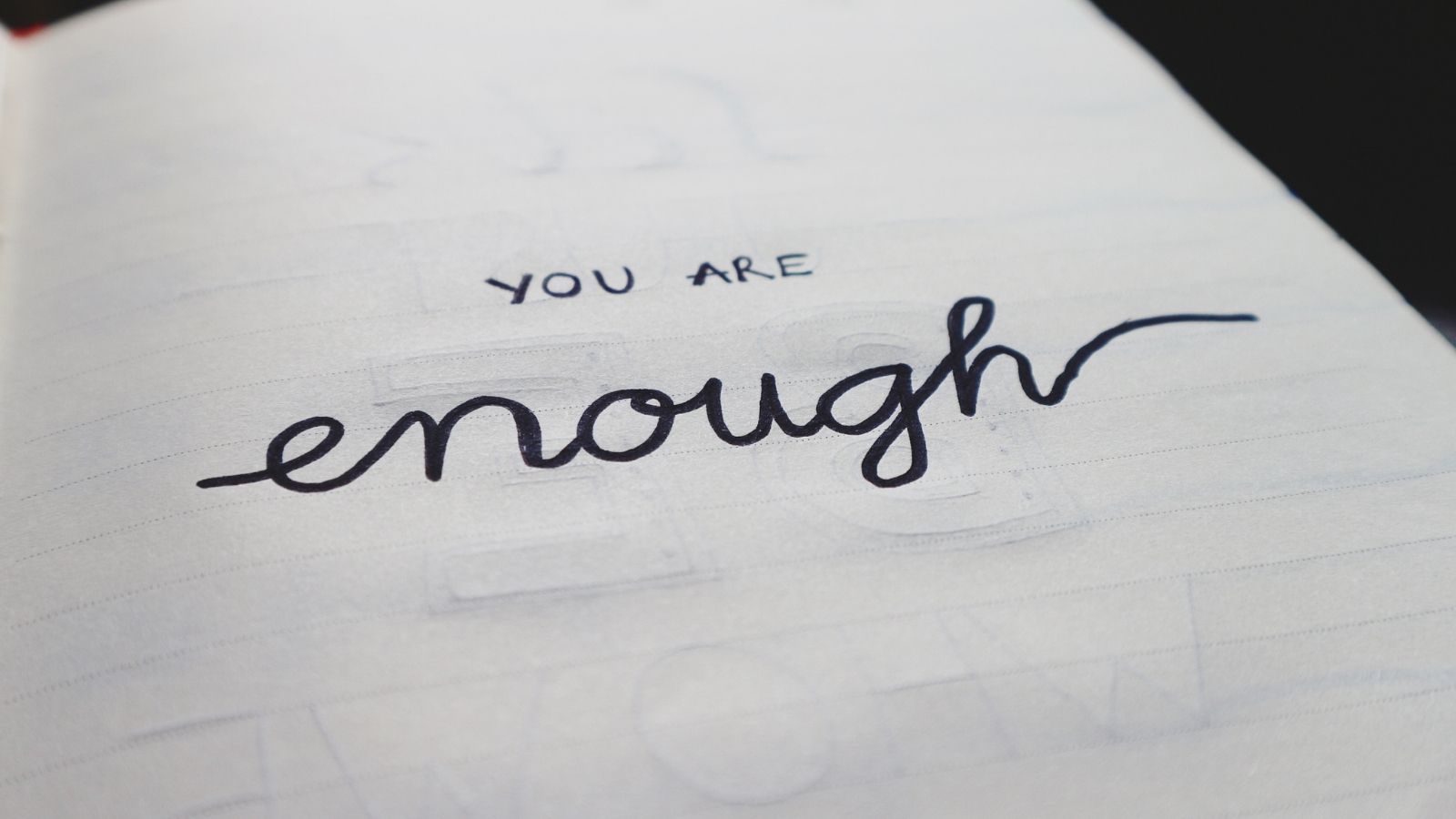
you are enough

6. Realise it’s never about you!

If you don’t get that job or promotion, or you’re not asked to do something or invited out. Remember it’s not about you. People are looking for something specific (usually what they think they need or want!) try not to take rejection personally. It really is not about you.

balanced diet

7. Eat a well-balanced diet

This doesn’t mean eating half a celery stick for breakfast and the other half for dinner. It’s about getting enough fruit and vegetables and protein, a sensible amount of carbohydrates, tailored to how much exercise you’re doing (or not as the case may be!) But it’s also about allowing yourself to have treats occasionally and to savour what you do eat. If possible eat at the table and take your time.

Try not to eat at your desk/running round the kitchen/in the car on your way to work. Making food look nicely presented can also add to the enjoyment of it. So get out your best china, use those glasses Auntie Joan gave you for your wedding day and make every day an occasion.

be kind to yourself

8. Be kind to yourself

We’ve already touched on this one, but being kind to yourself is so important. Ensure you notice when things are going well, when you’ve taken a step out of your comfort zone or told someone that you’re not willing to do whatever they’re asking you to do.

Celebrate every little baby step along the way. Take a little look back and see how far you’ve come.

Make sure you speak kindly to yourself at all times. Experiments show that pot plants tend to wither and die if they get shouted at and that meme going around saying that people are just pot plants with complicated emotions is so true. If you wouldn’t berate your pot plant for getting something wrong, don’t berate yourself. (If you would shout at a pot plant, you might need to seek help!)

mistake

9. Be chilled when you make a mistake

When you get something wrong (which you inevitably will, we all do!) be as calm as possible. If there is nothing we can do to rectify the situation, accepting it and learning from it is all we can do.

As a younger person I once misread a recipe for a tea-loaf and added in half a pint too much tea. Which resulted in a sloppy mess and me feeling like I was a rubbish cook. This is far from the truth of the matter, I am a good cook, I was just having a bad day and I’d just made a mistake!

the future will take care of itself

10. Know that the future will take care of itself

Often we worry about the future, trying to control outcomes and lying awake at night every night worrying about something that hasn’t happened yet.
Usually the future works out for the best, even if you don’t quite get the life you’d envisaged. Often the universe has something better waiting around the corner so instead of worrying about what might be and all the bad things that could happen, remind yourself that everything usually works out well in the end.

What’s YOUR top tip for feeling fantastic?

Please pop me a comment in the box below

How to give yourself permission

How to give yourself permission

What do you need to give yourself permission to do? Some of us need permission to rest or have time to ourselves. Others need permission to do something big like leave a bad relationship or find a new job..

Rosemary Essential Oil

Rosemary Essential Oil

Rosemary Essential Oil helps you to think more clearly and may be helpful for foggy-headedness associated with menopause. It helps relieve pain and is good for headaches and migraines

How to look good during menopause

How to look good during menopause

How to look good during menopause As you go through menopause, the fluctuation of hormones can cause your skin and hair to change. Skin can become dry and start to lose some of...

Listen to your body before it starts to scream

Listen to your body before it starts to scream

 What is your body trying to tell you?

 Take a few minutes to sit down in a quiet space and listen to what you body is trying to tell you. 

It may be that your body needs to take more water, or to rest for a while. Or to take some time out from the hustle and bustle of daily life and to have a rest.

It might need a nap, to have a massage or just to get up and dance. Maybe it needs some fresh air or some nourishing food. It could be that it fancies having a cream cake! Who knows! 

Consider what it is telling you and then make a judgement on whether what it’s asking for is a reasonable request. If it’s asking for a deep fried mars bar just tell it no! 

Listening to your body can be a little bit like noticing what is happening on the dashboard of your car. When the refuelling light comes on you can possibly ignore it for a mile or two, but if you pass a filling station it would be a good idea to pull over and refuel.

Your body is similar to this. Our internal batteries need recharging as often as our phones do. We need good food, plenty of fresh air and exercise, enough liquid to stay hydrated. We also need time to do the things we love. We need time to play and to potter around the house and garden doing those little jobs that we all need to do but often put off doing through lack of time


what does your body need right now

In order to truly listen, we need quiet.

It can be hard in an increasingly busy world to find time to stop and pay attention to what your body wants. So we need to create some quiet time. Time where we can be still and gather our thoughts. Some people meditate but others find that they have a chattering brain and find meditation unnecessarily stressful. If you’re one of the later perhaps go to bed half an hour earlier, get snuggled under the duvet and listen. Try quietly asking yourself ‘what do I need right now?’ 

Make note of what you hear in response to this. It may be something surprising. But listen, hear your body out. 

Don’t wait until you get to the stage it’s having a toddler stay tantrum, spits its dummy out of the pram and goes on strike!


Over to you! 

What is your body trying to say to you? Do you listen to it? Please let me know in the comments box below

How to cope with the frustrations of being a beginner

How to cope with the frustrations of being a beginner

Being a beginner

There have been a few times recently when I’ve ended up feeling very frustrated whilst attempting to learn something new. Especially when whatever I’m learning isn’t immediately obvious. In the past, I’ve felt proud of myself for being able to figure things out, without too much input from other people. But these last couple of weeks have found me in the position of being a beginner and a struggling beginner at that.

I guess that I felt frustrated because I felt I should know how to do whatever I was learning to do. That I was supposed to simply pick it up like I have other things I’d learned in the past. Intellectually, I love the challenge of figuring things out for myself. Whilst I appreciate that there are plenty of online video tutorials on absolutely anything and everything these days, I love it when I can intuitively figure things out, without having to sit through hours and hours of online tutorials.

A natural..or not?

Growing up, my dad used to tell me that so and so was a ‘natural’ at *whatever* making it seem like you either naturally had this ability pre-installed within you. Or you didn’t. He never really ruled out the idea of working hard to get where you wanted to be, but a lot of his thinking was based around people having a natural propensity for doing x,y and z (or not as the case may be!) I used to love it when he told me I was a natural at *whatever*

Learners Discomfort

As an adult this has got me thinking. There have been times in my life when I’ve not wanted to learn something new, especially if it’s a bit hard (and if I don’t appear to have that innate natural talent my dad was so fond of!) I find it hard being a beginner. There I’ve said it. I don’t like it. It makes me feel uncomfortable and cross and brings out my inner petulant toddler. I want to be good at everything immediately and dislike the process of going from a unskilled beginner to a fairly competent person. 

I’ve been afraid of the discomfort of not knowing exactly which button to press to get it to do what I want it to do. The frustration of knowing how I wanted something to look but the inability to make it happen. And that’s ok, it’s only part of the process we go through from beginner to competent.

How do you cope with the frustrations of being a beginner?

Firstly, be kind to yourself. No one figures everything out immediately. It’s ok to not understand how to use the equipment or the software at first. Especially if the company providing the software or instructions haven’t made it very intuitive to use. 

Secondly it’s ok to play. Often what we need to do to figure out how to move from being a beginner to being a competent person is to play. To see what the software can do. To see what notes we can make out of our musical instruments, or to experiment with ingredients in a recipe.  It’s ok to look up tutorials (if only to keep blood pressure levels down and to prevent incidents of low flying laptops and smashed windows!) 

It’s also ok to make a few mistakes, to reassess and try again. Apparently it took 10,000 attempts to get a light bulb to work in the way we experience it today. No one has invented anything big during the first few minutes of trying. So you don’t have to either. It’s also ok to walk away for a while and to come back to it. When we get anxious or frustrated or close to having a tantrum, it can be hard to think in a logical way. So taking a break, moving around the room, getting some fresh air and coming back to it later are all great ways to help break the frustration cycle.

It will get easier

As I found when trying to recreate a latte during lockdown, it does get easier. The first day I tried creating a latte I got the milk/coffee ratio all out of proportion and ended up with a very weak, milky mess. The second time I tried it I used a larger coffee to milk ratio and whilst it wasn’t perfect it was better. By the third day I’d figured out I needed x amount of milk and y amount of coffee and whilst I was no where near winning barista of the year award, it was pretty drinkable. It still didn’t quite beat the hiss of the proper coffee machine but it was fine. It made me realise that actually practice and being kind to myself were what made all the difference to the whole process. So I would say be patient and kind and you will get there in the end.

Like what you see?  Come and find me on Pinterest 

https://www.pinterest.com/sarahcooperreflexology 

Over to you!

What’s your experience of being a beginner been like? Please leave me a comment and any tips you might have for making the process of being a beginner easier

Lifestyle Audit. What is it and how can it help?

Lifestyle Audit. What is it and how can it help?

Lifestyle Audit. What is is it and how can it help?

When I first started training as a complementary therapist we were given consultation forms to fill in with our clients. On these forms there were a number of questions about lifestyle and habits. 

At first I struggled understanding why we were asking these questions. Surely the client had come to have a treatment not be interrogated about how many portions of fruit and veg had darkened their dinner plates recently? 

Did it matter if they drank a whole bottle of wine every evening?

What about if the only exercise they got was jumping to conclusions and walking between the fridge and the biscuit cupboard? Does it matter?

I scratched my head a few times, puzzled as to why we were asking such seemingly silly questions.

Lifestyle audit balanced diet

Why it is important to do an occasional lifestyle audit?

After a while I realised that these things are really important. Not least because it allows the client to get an overview of what they’re doing (maybe without thinking). It gave them a chance to do a quick lifestyle audit.

Some of them had a-ha moments realising that maybe they didn’t get as many portions of fruit and veg as they needed. Or they were not getting as many hours sleep as they thought they were.

Maybe that was why they were tired all the time? I know there were a few changes I needed to make to my diet and lifestyle which I’d not considered before. Small things that would make all the difference.

It highlights quick and simple changes to get great results

The questions allowed people to see really quick and simple changes that they could make which would get great results in super quick time.

They could then make a change if they wished, whether it be to take more exercise by walking to work when they could, or to increase the amount of fruit and veg they had in their diets, drink more water or drink less tea and coffee. Or lay off the alcohol. Or cut back a little.

The best bit about the whole thing was they were coming to their own conclusions. I wasn’t telling them that they had to swap their sauvingon blanc for H2O or that they’d have to give up their 7th coffee of the day and start drinking herbal tea instead (bleurgh!) 

They were seeing where things were working well, for themselves and where things were working less so. They were able to make the changes that they felt were right for themselves, in that moment. But only if they wanted to. Some didn’t, and that was fine too!

If they were struggling to switch off before bed, they were able to create a relaxing bedtime routine which helped put their body into a calm, relaxed state, ideal for drifting off.


What might you consider if doing a life audit?

  • How well do you eat? Do you include plenty of fruit and vegetables, proteins, fibre and healthy fats? 
  • How well you sleep? How many hours? Do you wake feeling recharged and refreshed?
  • How tired you feel day to day?
  • How often you can take time for yourself? How often DO you take time for yourself?
  • How happy you feel right now?
  • Do you see daylight every day?
  • How stressed are you at home and at work?
  • How often do you exercise?
  • How many units of alcohol do you drink a day?
  • How many cigarettes do you smoke a day?
  • How much support you have at home?
  • How often do you spend time with friends, family and loved ones?

Find me on 

Pinterest www.pinterest.com/sarahcooperreflexology

How comfortable are you with being uncomfortable?

How comfortable are you with being uncomfortable?

How comfortable are you with being uncomfortable?

The reason I ask is because there’s been times in my life when I’ve felt very uncomfortable with the idea of being uncomfortable.

My experience of being uncomfortable

When I was at school I used to have to catch two buses to get home. On cold, wet, winters nights it got very uncomfortable. Often I’d be soaked to the bone, freezing wet, carrying my P.E. kit and my violin case (and if timetabling was very poorly thought out, my cookery basket too) 

After 5 years of that I got very fed up of weather full stop. Once I passed my driving test I was able to avoid the discomfort of waiting for the bus altogether. 

Nowadays I’ll still think twice about going out if it’s raining because I hate the thought of being that uncomfortable again. In fact on rainy days you’ll still find me sitting under a blanket with a good book and a cup of tea by the fire, rather than getting soaking wet outside. If possible that is.

Dancing in the rain

Not just physical discomfort. I’m not comfortable with being emotionally uncomfortable either!

But comfort doesn’t just cover staying warm and dry in my car. It’s more than that. There’s been times in my life when I’ve not wanted to be uncomfortable so I’ve avoided social situations or situations that I’m not 100% sure of the protocols. 

I’ve not invited people to do things in case I had to face the discomfort of them saying no to my offer. I’ve avoided interviews in case the interviewer asks me something I can’t answer or asks me to perform a task I’m unfamiliar with.

I’ve not tried certain foods in case I don’t like them and avoided pubs and social events if I’m not sure whether we’re buying rounds or not. Or what the dress code is. I’m not averse to buying a round, but I want to get it right, so I don’t have to deal with the discomfort of doing the wrong thing.

In the past I’ve felt the need to hide out of the way of people, just in case they decide they don’t like me. 

I’ve learned now not to do this so much as I’ve realised having the marmite effect on people can actually be really helpful. 

If people love me, then great but if they don’t then it’s probably helpful for them to run away screaming (perhaps silently, we don’t want to upset the neighbours now do we?) 

They’re not going to add anything to my life are they if they don’t like me. If they don’t like me, don’t get me, don’t want to spend time with me, the best and most comfortable thing I can do with them is set them free and concentrate on those who do want to spend time with me! 

Reflexology is not an alternative therapy

Have you tried being uncomfortable though?

It can be quite liberating. When my children were younger, I was dragged out a couple of times during thunder rain and got soaked to the skin then, but in a safe way. 
As I wasn’t having to wait for a bus and then go to school in soaking wet clothes, it did feel a bit safer to be uncomfortable. It felt bizarrely quite nice listening to the splash of the rain as it hit the pavement, to smell the smell of the rain as it connected with the earth. It felt good to have the rain blash against my face, soaking my hair to my head. It felt even better when I came back inside to a change of clothing and a steaming hot cup of tea. I almost enjoyed it.

It was like the time when I did my sky dive. On my very first flight (as you do!) During the 25 seconds that it took me to fall at 125mph I couldn’t breathe. The wind was flapping my cheeks. 

There are still things I find a challenge, like recording videos but each time I do one it gets a little bit easier and a little bit easier until I imagine it will just become second nature in the end.

Moving from uncomfortable to comfortable

So how do we make that transition from not wanting to feel uncomfortable to being comfortable in that given situation? It boils down to taking baby steps. 

So instead of jumping in the deep end straight away, take a smaller step.  I could record a short video, edit it a little if necessary and then post it online. I could record a podcast or I could just record myself for my own eyes until I got better at it. But if at first it’s really hard, it’s important not to get too disheartened. Be gentle with yourself and if you find it tough, just try again a different day.

Like what you see? 

There’s more on Pinterest

Which Lavender Essential Oil shall I use?

Which Lavender Essential Oil shall I use?

How to choose which Lavender essential oil to use

When choosing a lavender essential oil, it is worth considering the following

What result are you hoping to achieve?

There are a few things to take into consideration before you decide which one to use.

What lavender essential oil should I use

For Relaxation and Sleep

If you’re wanting to relax and sleep, then a lavender essential oil originating from Bulgaria would be useful as its main chemical constituent is an ester.

Esters are usually relaxing, having a sedative effect. They have anti-viral properties as well as anti-fungal and generally have a fruity, sweet-smelling aroma.

The High-Altitude French lavender also has a high concentration of lynalyl acetate (esters) so will have a more calming and sedating effect than say a regular lavender essential oil of French origin

For Focus and a Mood Boost

If you need to stay feeling upbeat and focused or need to concentrate then you’d be better off using a French origin essential oil. These tend to be more uplifting, having alcohol as their main chemical constituent. Alcohol rich essential oils tend to be antiseptic and antiviral.

lavender spike essential oil

Lavender Spike (Lavandula Latifolia)

Lavender Spike is great for headaches, focusing and as an expectorant. So if you have a stuffy nose and a cold or cough or need your head clearing for a meeting or interview, lavender spike would perfect. It has antiseptic properties and a slightly crisper aroma than lavender. There’s something quite masculine about its aroma, with an almost harsh edge. I love it! It’s got a bit of a kick to it. It’s also great for relieving pain (especially headaches) and also has anti-depressant properties. Whilst it can be used in massage it is perhaps most useful in a diffuser or in an inhalation.


Lavandin Essential Oil

Lavandin (Lavandula X Intermedia or Lavandula X Hybrida)

Lavandin is often used by the perfume industry as it is cheaper, hardier and easier to grow than true lavender. It is made from a hybrid of true lavender (lavandula angustifolia) and spike lavender (lavundula latifolia). I always think of it as the baby of the lavender family.

It’s got a pleasant aroma but is thought not to have quite as much power as either lavender or lavender spike.

It is thought to have some beneficial effect on the respiratory system and still helps clear the head but maybe not as easily as Lavender Spike. It is also thought to have some analgesic (pain relieving) effect. As it’s not got quite as strong an aroma as either lavender or lavender spike it can get a bit ‘drowned out’ in blends when teamed with a much more pungent aroma.

Sometimes lavandin is used to bulk out or water down lavender which is more expensive and not as quick or easy to grow.

Where to buy Essential oils

Lavender, Lavandin or Lavender Spike

Naturally Thinking 

Neal’s Yard Remedies Organic (affiliate link: If you buy anything from here using this link I will receive a percentage)

Related Article: https://www.sarahcooper.co.uk/how-to-use-lavender-essential-oil-for-best-results/


The 5 am Club

The 5 am Club

The 5 am Club. Could you get up earlier to get things done?

Several authors have written about the benefits of getting up at some ungodly hour (usually 5 am!) The theory is if you get up early enough you will be able to do all those things you’d like to do before your normal day begins. 

You would have time to write in your journal, eat a healthy breakfast, go for a run or a swim, meditate maybe, do some yoga or make a start on that novel you’ve been telling everyone you’d like to write. 

Why do people join the 5 am club?

In the days where the telephone would only ring between 9 am and 5 pm this may well have been a very sensible suggestion. Having a clear space in which to just simply get on with things without interruptions from family members and the telephone is definitely a sensible idea. For some people it would be a fabulous idea. But I don’t think it will be the perfect answer for everyone as we are all different.

yawning

Biorhythms and your own Body Clock

Take into consideration your own personal biorhythms. Some of us are up with the larks and naturally very much a morning person, whereas others of us are definitely nocturnal by nature and the very thought of expecting a fully-fledged night-owl to get up at the crack of dawn is about as sensible as expecting your pet hamster to go to sleep during the night time. 

My key concentration time starts about 8 am after I’ve done the college drop off and I’ve stumbled blurry eyed back to my desk with a pot of fresh coffee. This is when I can focus the most and I get most done. But I dare say if I tried getting up at 5 am, I’d likely be slumped in a corner by 2 pm. Which is no good at all!  

Put yourself in the diary!

Scheduling in some time to do the things you love is a good idea. When you do this is up to you. If you fancy getting up at 5 am then great give it a go. If you don’t this is absolutely fine too. Write a list of the things that you’d like to do, but never quite seem to find time for. Then look at your diary and schedule those things in first. 

tuba practice is not suitable for the 5 am club

Word of Warning! Not all hobbies are suitable for the 5 am club

The only thing I would say is if you do decide to get up when other people are trying to sleep, be mindful of the type of activities you undertake. Tuba practice? No. Shredding old documents? No. Tap dancing? No. Practicing for your role in the local amateur operetta. Definitely not!

 Quiet activities certainly, but keep anything that’s likely to get you an Anti-Social Behaviour ticket for when everyone else is awake. 

Over to you

Could you get up at 5 am to get things done? DO you get up early to get things done? 

If you had an extra hour a day what would you do with it? Please leave me a comment in the comments box below 

Pin It on Pinterest

Privacy Overview
Sarah Cooper Reflexology and Massage in Boroughbridge, Ripon and Surrounding Villages

This website uses cookies so that we can provide you with the best user experience possible. Cookie information is stored in your browser and performs functions such as recognising you when you return to our website and helping our team to understand which sections of the website you find most interesting and useful.

Strictly Necessary Cookies

Strictly Necessary Cookie should be enabled at all times so that we can save your preferences for cookie settings.